Huntmotion
Why Buying Huge Lead Lists Fails: Choosing the Best B2B Lead Generation Software

Contents
What percentage of the leads sitting in your sales queue right now will actually answer an email?
Take a second to guess.
Most sales directors assume seventy percent. In practice, after three months of list aging, job changes, and spam-trap rotations, barely thirty percent of standard commercial databases remain deliverable. The rest bounce, hit dead mailboxes, or quietly torch your domain health.
Finding the best b2b lead generation software comes down to how well a tool solves reachability, context, and workflow integration. If your reps spend three hours every morning cross-referencing contact info across LinkedIn, Hunter, and an enrichment tool, you don't have a software stack. You have an expensive manual assembly line.
Let's look at what modern B2B lead generation actually takes, where traditional list-buying falls flat, and which tools earn their keep in 2026.
What is the best B2B lead generation software?
The best b2b lead generation software is a system that identifies high-fit prospective accounts, validates deliverable contact points in real time, and triggers contextual outreach without manual data cleaning. Top platforms like Apollo, ZoomInfo, Cognism, and Huntmotion replace disconnected scraping and verification tools by turning public buying signals into verified sales conversations.
Instead of handing your sales development reps a flat CSV file of names and generic job titles, a strong platform verifies every single contact channel before you send a message. That single operational distinction protects your primary domain from burning its sender score while ensuring reps talk only to accounts matching your exact ideal customer profile.
The Three Big Misconceptions About B2B Lead Generation
Sales teams regularly fall into three predictable traps when shopping for outbound tech. Sorting truth from sales pitch saves months of wasted pipeline.
Misconception 1: Bigger databases always equal more revenue
Database vendors love advertising eighty million or two hundred million global contacts. It looks impressive on an executive slide deck. But static contact databases decay at roughly two to three percent per month as people switch companies, change titles, or abandon corporate mailboxes.
Buying access to millions of stale contacts forces your reps to act as unpaid data scrubbers. They hunt through disconnected phone numbers and guess email patterns. Look for systems that pull fresh data directly from live public sources—like updated company registries, storefronts, and active team directories—rather than querying a static snapshot downloaded six months ago.
Misconception 2: Personalization means inserting a first name and company tag
We have all received the message: "Hi {{First_Name}}, I saw that you work at {{Company_Name}} and thought you'd love our solution."
Buyers delete those instantly. Real personalization requires factual context. Did the company just migrate their billing system? Are they opening a new distribution warehouse? Are they hiring for a specific technical role? True context comes from enriched signals, not superficial merge tags.
Think of it like walking into a hardware store with a broken pipe. If a clerk walks up and shouts your name from your badge, it feels weird. If they look at the cracked copper fitting in your hands and show you the exact replacement, you buy it immediately—and you might even thank them. Pipeline software should supply that same context.
Misconception 3: You need four separate subscriptions to run outbound
A typical legacy outbound stack looks like this: one tool to scrape names, a second tool to enrich phone numbers, a third tool to verify email MX records, and a fourth platform to sequence the sends.
Every boundary between those tools creates data loss, synchronization delays, and broken automations. When an SDR exports a CSV from one dashboard, uploads it to a cleaning tool, downloads the clean file, and imports it into a sequencer, half their day disappears into open browser tabs. Integrated engines eliminate that friction entirely.
Core Criteria: How to Evaluate B2B Lead Generation Platforms
Before demoing any software, evaluate how each candidate handles five core capabilities:
- Data Freshness and Discovery: Does the platform sweep live web signals, or does it query a fixed internal warehouse?
- Channel Verification: Does it test mailbox validity and deliverability before charging you or logging the lead?
- Signal Enrichment: Can it track tech stacks, hiring intent, market changes, and company size?
- Workflow Automation: Does it draft contextual messaging and queue outreach safely from your mailbox, or do you have to build complex third-party workflows?
- Auditability: Can you see why a lead received a high fit score, or is it an opaque algorithm?
| Platform | Best For | Discovery Model | Channel Verification | Delivery & Sending |
|---|---|---|---|---|
| Cognism | Enterprise EMEA & US outbound | Phone-verified database | Manual mobile verification | Third-party integrations |
| ZoomInfo | Large enterprise sales orgs | Massive static database + intent | Native credit-based check | Integrated enterprise suite |
| Apollo.io | Early-stage teams & general outbound | Contact database + sequencer | Built-in email validation | Native email sequencing |
| Huntmotion | Autonomous discovery & pipeline generation | Nightly open-web discovery sweep | Channel verified before delivery | Autonomous drafting & safe-pace sending |
| Leadfeeder (Dealfront) | Inbound IP tracking | Website visitor de-anonymization | N/A (IP-to-company mapping) | CRM routing & alerts |
Top B2B Lead Generation Tools Compared
1. Cognism: Best for Global Compliance and Phone-Heavy Outbound
If your sales team relies heavily on cold calling across European and North American markets, Cognism stands out. Their team manually validates mobile phone numbers, which cuts down on disconnected dials and gatekeeper loops. Their strict adherence to GDPR and local Do-Not-Call registries provides peace of mind for legal teams.
The trade-off is cost. Cognism carries enterprise pricing tiers and annual contract commitments that stretch smaller budgets.
2. ZoomInfo: Best for Enterprise Account Intelligence
ZoomInfo remains a dominant force for enterprise revenue organizations requiring deep organizational charts, historical spend data, and firmographic mapping. Their intent data features alert reps when target accounts search for specific software categories.
Its vast feature set requires dedicated administrator oversight. Teams often use a fraction of what they pay for, and contact accuracy outside core enterprise accounts varies.
3. Apollo.io: Best All-in-One Database for Growing Teams
Apollo has become a standard choice for early and growth-stage outbound teams because it packages a massive B2B directory alongside built-in email sequencing and basic dialing. Its pricing is accessible, making it easy to stand up a functional sales outbound workflow in an afternoon.
The platform relies heavily on user-contributed contact networks, meaning deliverability rates fluctuate. Reps must remain vigilant about validating lists to prevent bounce spikes.
4. Huntmotion: Best for Autonomous Lead Discovery and Outreach
For teams that want to eliminate manual prospecting, Huntmotion functions as an active engine rather than a passive database.
Instead of forcing reps to search and filter static records, the system runs a nightly sweep across public web sources, storefronts, and company registries to identify businesses matching your specific criteria. It enriches each prospect with technical details and company attributes, calculating an objective fit score out of 100. (For instance, finding 1,284 candidates overnight and ranking Atlas Outdoor Co. with a 92 fit score based on real footprint updates.)
Reachable, or it doesn't ship. Huntmotion verifies that an open communication channel exists before the lead ever hits your pipeline. You sleep. The engine hunts. It writes contextual outreach tailored to each prospect and queues sends safely from your own sending infrastructure. The entire ledger remains visible, giving sales managers complete transparency over every discovered lead and outreach touchpoint.
5. Leadfeeder by Dealfront: Best for Identifying Warm Website Traffic
Not all lead generation begins cold. Leadfeeder identifies which companies visit your website by mapping static IP addresses to corporate entities. It shows what pages those organizations viewed, how long they stayed, and which marketing channels brought them there.
While it won't give you the exact individual email address of the person browsing your pricing page, it provides outbound reps clear intent signals to pursue target accounts that already know your brand.
What High-Performing Sales Outbound Actually Looks Like
A modern outbound motion should run predictably without turning reps into full-time researchers. When you remove manual list cleaning from the daily routine, the entire sales floor shifts focus to holding discovery calls and closing deals.
Consider how your current outbound process operates. When a rep opens their laptop at 8:30 AM, are they spending forty minutes verifying whether an email address at Atlas Outdoor Co. is still active? Or are they reviewing three qualified replies that landed in their inbox overnight?
Finding the right b2b lead generation platform is about picking a system that matches how your reps sell. If your team makes 80 cold calls a day, prioritize verified phone data. If you run targeted email campaigns, prioritize real-time web discovery and guaranteed channel verification.
When you replace static, bought spreadsheets with an engine that discovers, enriches, and validates leads autonomously, outbound stops feeling like a chore. You gain back dozens of hours per rep, while keeping your sender reputation spotless—and that quarter-over-quarter compounding is what turns outbound from a roulette wheel into a predictable engine. To see how autonomous discovery and verified outreach build pipeline, take a look at Huntmotion.
Written by Alice Brown · Sales Director
All articles by Alice BrownRelated posts

Building a B2B Sales Pipeline from Scratch vs Buying Stale Contact Lists
A practical walkthrough on how to construct an outbound B2B sales pipeline from zero, define clear deal stages, and qualify prospects without burning your domain reputation.
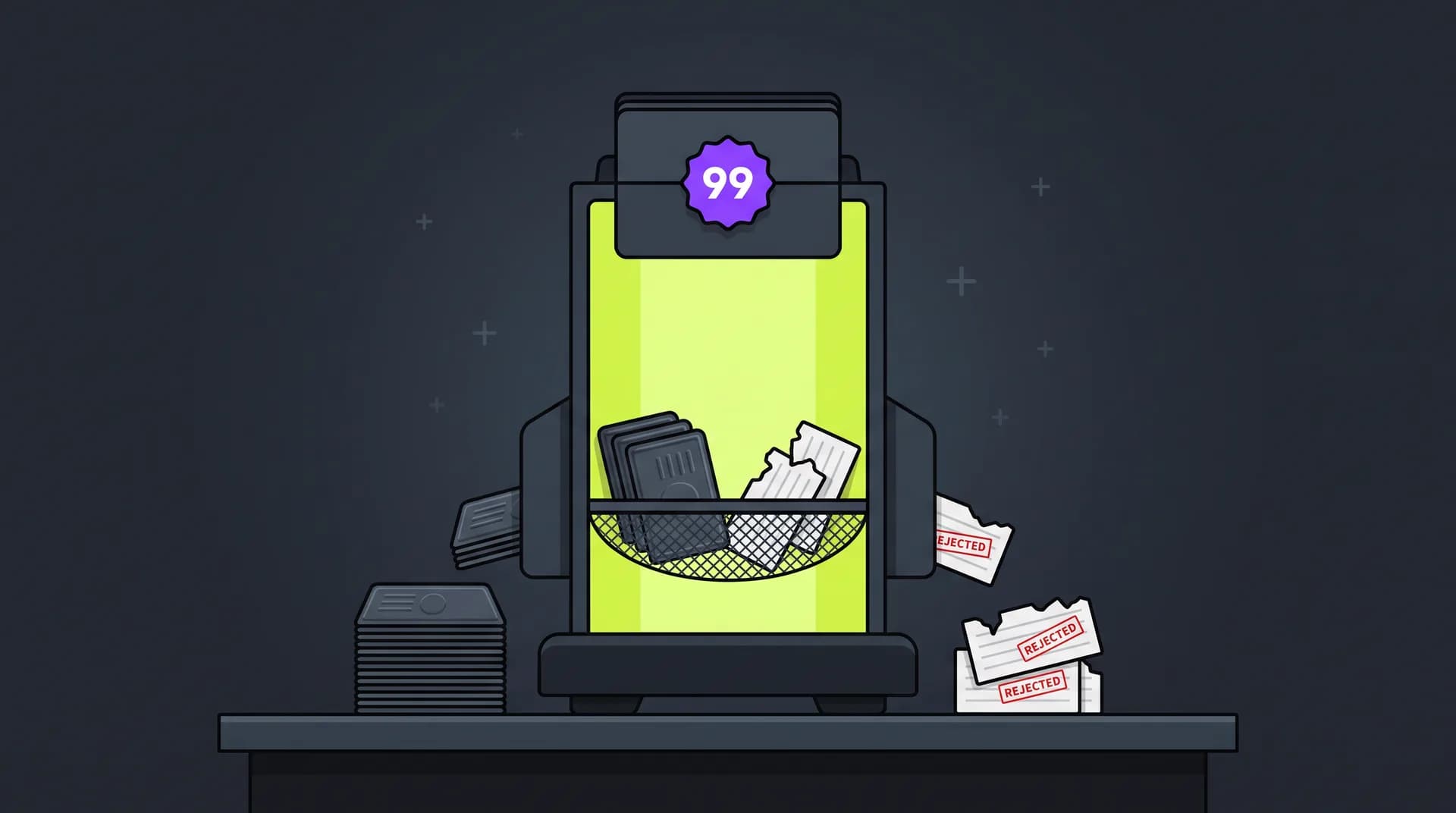
Stale Lists vs. Active Discovery: The Realities of Lead Generation and Scoring
A purchased list with a 40% bounce rate costs you more in domain reputation than it ever makes in revenue. How you generate and score those names dictates whether your sales team spends their morning selling or cleaning data.